


A Defining Week for Interest Rates | How Is the Federal Reserve Approaching the Markets?
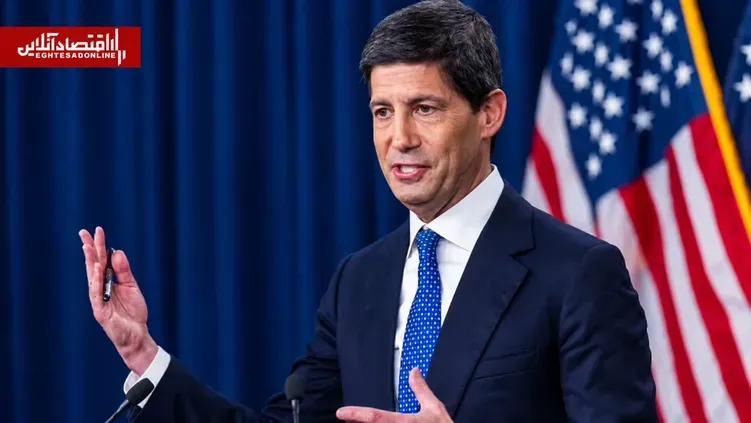
EghtesadOnline: In less than a week, Kevin Warsh and his colleagues at the Federal Reserve will send a fresh signal to financial markets from Washington, D.C. An analysis of market expectations shows that views on the trajectory of U.S. interest rates have changed significantly since the Fed’s September meeting.
Global Economy – Danial Rahimi: In four days, on Wednesday, November 4, the Federal Reserve will announce its latest interest rate decision. Half an hour later, Kevin Warsh will take the podium for a press conference.
This time, he faces a market that, after six weeks of shifting expectations, increasingly anticipates that interest rates will remain unchanged. This comes as oil prices have risen and two major inflation reports have come in above forecasts. The gap between these hotter-than-expected data and market expectations for a rate hold is the central question heading into the upcoming meeting.
The last time Warsh spoke to reporters following a Fed meeting, he and his colleagues unanimously raised interest rates by 25 basis points, bringing the target range to 3.75%–4%. The message of the September 16 decision was clear: inflation remained too high, while the economy was strong enough to withstand higher rates.
The dot plot released that day reinforced this hawkish outlook. The median projection put the federal funds rate at around 4.1% by the end of the year, implying one additional increase after September’s hike. Four officials even considered two further increases appropriate. The prevailing outlook, therefore, pointed toward continued rate hikes, although policymakers did not agree on the number or timing of future moves.
Initial data released after the meeting gave markets further reason to take this trajectory seriously. September’s preliminary Purchasing Managers’ Index (PMI) pointed to accelerating economic activity and mounting pressure on business capacity. Following its release, the probability of a rate hike at the October meeting, according to the FedWatch figures cited in an S&P Global report, rose from around 55% to above 70%. The economy still appeared overheated, and markets believed the Fed might not wait long before taking its next step.
But that expectation did not last.
The First Variable That Changed Market Expectations
The October 2 employment report delivered the first serious challenge to the narrative of rapid rate increases. The U.S. economy added just 29,000 jobs in September, compared with economists’ expectations of around 90,000. Employment figures for the previous two months were also revised down by a combined 60,000 jobs, while the unemployment rate rose to 4.2%. The data suggested that hiring was progressing more slowly than previously thought.
Initial jobless claims, however, remained low, with no evidence of a broad wave of layoffs. Nevertheless, for a market that had been anticipating another increase shortly after September’s decision, even this weakness in hiring was enough to raise doubts about the pace of further monetary tightening.
Then two inflation reports complicated the picture further.
On October 14, the Consumer Price Index (CPI) showed that prices had risen 0.6% month over month in September, bringing annual inflation to 3.7%. Both figures differed significantly from market expectations. Gasoline prices surged 9.1% during the month, accounting for more than half of the increase in the headline index. But gasoline was not the only concern: core inflation, which excludes food and energy, rose 0.3%, exceeding economists’ expectations of 0.2%. Housing and services also contributed to price pressures.
A day later, the Producer Price Index (PPI) sent a similar signal. Producer prices rose 1.3% month over month, far above the forecast increase of 0.5%. The report suggested that higher energy costs were spreading beyond household fuel bills into transportation, warehousing and business operations. If companies can pass these costs on to consumers, inflationary pressure could persist in the months ahead.
Even the latest data released on Friday, October 23, did not fully ease these concerns. The preliminary business activity index fell from 58.4 to 57.6 but continued to signal substantial growth. At the same time, companies’ selling-price index reached its highest level since August 2022. Growth had moderated slightly, but businesses had not lost their pricing power.
Why Has Higher Inflation Not Made an Immediate Rate Hike Inevitable?
For some analysts, these figures provide a strong argument for further rate increases. Alex Pelle, an economist at Mizuho, told Reuters that the combination of a resilient economy and elevated inflation supported raising rates, warning that the Fed risked falling behind in its fight against inflation.
But timing is central to the opposing argument. A rate increase does not have its full effect on household spending, borrowing and corporate investment on the day it is announced. Financial markets react quickly, but the impact of higher borrowing costs on economic demand emerges gradually. The Federal Reserve itself has emphasized that monetary policy affects economic activity, employment and prices with a lag. Therefore, two higher-than-expected inflation reports do not, on their own, prove that September’s increase was insufficient or that it must immediately be followed by another hike.
Statements from Fed officials have reinforced the distinction between the need for further increases and the need to raise rates immediately.
John Williams, president of the Federal Reserve Bank of New York, said at the end of September that there was no need to rush the next move, although he considered another increase by year-end appropriate.
Philip Jefferson also emphasized the need for more time to assess incoming data and changing financial conditions.
On October 8, Christopher Waller made this position more explicit. He said further increases would be necessary if the economy continued along its expected path, but they did not necessarily have to occur at consecutive meetings. His remarks allowed markets to reconcile a possible pause in October with continued monetary tightening in the months ahead.
Warsh also refrained from prejudging the next meeting in a speech on October 16, despite the higher inflation readings. He described the economy as broadly developing in line with expectations at the time of the September decision. Markets weighed his remarks alongside other officials’ signals of patience, once again assigning greater weight to the possibility that rates would remain unchanged in October. The comments were interpreted as dovish.
How Have Markets Responded in the Meantime?
The Treasury market initially priced in higher financing costs for the economy. The 10-year Treasury yield stood at around 5.01% on the day of the September meeting before climbing to approximately 5.31% in early October. However, on Thursday, October 22, demand for safe-haven bonds increased alongside a sell-off in technology stocks, pushing the 10-year yield back below 5%. Rather than signaling that inflation concerns had disappeared, the decline in yields that day was accompanied by growing anxiety over the stock market.
Equity performance over the past six weeks has also been uneven. From the close of trading on September 16 through the close on Thursday, October 22, the S&P 500 gained around 1.5%, while the Dow Jones Industrial Average rose approximately 2.7%. The Nasdaq, however, returned to roughly its starting point, while the Russell 2000, which tracks smaller companies, fell about 2.6%. Gains in some indices have obscured pressure elsewhere in the market.
Artificial intelligence has been at the center of this divergence. Companies such as Meta continued to report revenue growth, but investors became increasingly sensitive to the cost of building AI infrastructure and the time required to generate returns on those investments. Despite a 26% increase in revenue, Meta reported negative free cash flow, and its shares fell around 7% on Thursday. Revenue growth remains important to investors, but companies’ ability to convert that growth into cash is receiving greater scrutiny.
Oil and gold have followed different trajectories. Brent crude rose from a settlement price of $105.83 on the day of the September Fed meeting to above $118 by the latest Friday ahead of the upcoming meeting. Concerns about disruptions to energy supplies have kept oil prices elevated and complicated the market’s inflation outlook.
Gold, by contrast, has faced pressure from high interest rates and some investors’ need for liquidity. During Friday’s trading, prices briefly fell below $4,000. This behavior shows why geopolitical tensions do not always lead to higher gold prices. When the same tensions push oil prices and interest rate expectations higher, the opportunity cost of holding gold also increases.
Wednesday: What Message Will a Rate Hold Send?
After six weeks of shifting expectations, markets are taking inflation seriously but remain unconvinced that an immediate rate increase is necessary. Markets are pricing in a 92% probability that rates will remain unchanged in October and an 83% probability of a one-step increase from current levels at the December meeting.
The most likely scenario for Wednesday, therefore, is for the Fed to hold rates within the 3.75%–4% range. The significance of Warsh’s press conference will lie in how he explains that decision. Does the Fed believe September’s increase and tighter financial conditions have given it enough time to assess the incoming data? Or has the latest inflation data increased the likelihood of another move?
If Warsh emphasizes persistent inflation and the need for further increases, even an unchanged rate could push Treasury yields higher and put additional pressure on gold and risk assets such as Bitcoin. Conversely, greater emphasis on the lagged effects of monetary policy and weakening demand could reduce expectations for future increases.
Markets have prepared for the meeting. Wednesday will reveal what this pause means for the Fed’s assessment of the path ahead, and whether Warsh is willing to offer investors indirect clues about the October decision and the future direction of monetary policy.
Editorial note: I have preserved the structure and figures in your original report while translating it into financial-news English. Before publication, the meeting date and time, the references to Warsh and the rate decision, the employment and inflation figures, and the market probabilities should be independently verified. The source text contains some dates and claims that may require factual correction, and a faithful translation does not independently validate them.